
The meeting of the seminar
«Supercomputer technologies
in science, education and industry»
| Chairman of the organizing committee | |
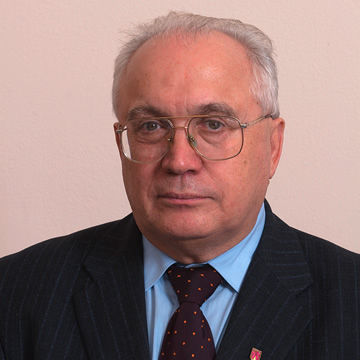 |
Sadovnichy V.A. academician, rector of Lomonosov Moscow State University |
Co-Chairs of the organizing committee |
|
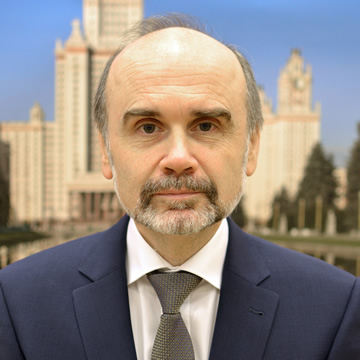 |
Voevodin Vl.V. Corr. RAS, Director of Research Computing Center of Moscow State University |
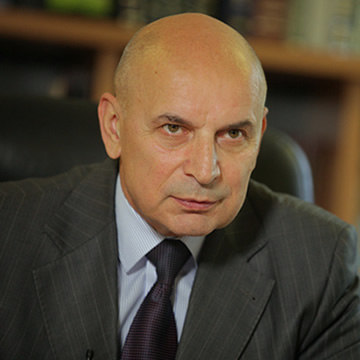 |
Sokolov I.A. academician, dean of the faculty of Computational Mathematics and Cybernetics of Lomonosov Moscow State University |
 |
Tikhonravov A.V. D. in Physics and Mathematics, Professor, Research Computing Center of Moscow State University |
Scientific Secretary of the seminar |
|
| Kutov D.K. Research Computing Center of Moscow State University |
|
The seminar was organized on the basis of the Scientific and Educational Center «Supercomputer Technologies». The reports cover all aspects of the use of supercomputers, parallel computing systems and distributed data processing methods for solving large computational problems. The seminar has a pronounced interdisciplinary nature, however, the various nuances of using supercomputer technologies are of interest to researchers from various fields.
The seminar is supported by the Moscow Center of Fundamental and Applied Mathematics.
Researchers, teachers, graduate and undergraduate students are invited.
PROGRAM
16:20 (GMT+3)
| Gritsun A.S. | Doctor of Physical and Mathematical Sciences, prof. RAS, leading researcher at INM RAS |
A study of the predictability of large-scale atmospheric processes on annual-decade intervals using the INM-CM5/6 Earth system model
This report examines the problem of forecasting the state of the Earth's climate system on timescales from one year to a decade. The primary method for solving this problem is ensemble numerical experiments with the INM-CM6 Earth system model [1], developed at the Marchuk Institute of Numerical Mathematics of the Russian Academy of Sciences. The format of the experiments and scenarios for changes in external influences on the climate system (greenhouse gas and aerosol concentrations, solar constant, etc.) are determined by the protocols of the DCPP (Decadal Climate Prediction Project) project of the CMIP6/7 Climate Model Intercomparison Program. The report discusses the quality of the forecast system in comparison with an ensemble of historical hindcasts [1], a system based on a previous version of the model [2], and the impact of initial data preparation methods and the procedure for generating an ensemble of initial states on forecast quality.
-----------------------------
[1] Gritsun, Andrey S., Volodin, Evgeny M., Bragina, Vasilisa V. and Tarasevich, Maria A. Simulation of modern and future climate by INM-CM6M. Russian Journal of Numerical Analysis and Mathematical Modelling 39, no. 6 (2024): 329-341
[2] Vorobeva, V.V., Volodin, E.M., Gritsun, A.S. et al. Analysis of the Atmosphere and the Ocean Upper Layer State Predictability for up to 5 Years Ahead Using the INMCM5 Climate Model Hindcasts. Russ. Meteorol. Hydrol. 48, 581–589 (2023).
The seminar session will take the form of a webinar on the Kontur platform.
To participate in the webinar, please enter your data in the Yandex form:
https://forms.yandex.ru/cloud/6994673290fa7bdbe5fea05b/
A link to the conference in Kontur will be sent to your e-mail address.
Please note that for better video communication quality, we recommend that you install the Kontur.Talk application in advance and access the conference through the application, NOT through your browser. Registration in Kontur.Talk is NOT required to participate in the conference.
Applications (desktop and mobile) can be downloaded at https://kontur.ru/talk#app.
If you plan to participate in person and you do not have a pass to MSU, you must fill out the form no later than March 4 (Wednesday). Please note that access will be allowed only through the southern entrance of the Second Building of MSU and only during the seminar.